- Nerd Out on Business
- Posts
- Turning Horsepower into Recurring Revenue
Turning Horsepower into Recurring Revenue
Archrock shows how even industrial services can be packaged like SaaS. Scale and process drive profits, but a leveraged balance sheet is the weak link.

Nick Horob
September 13, 2025
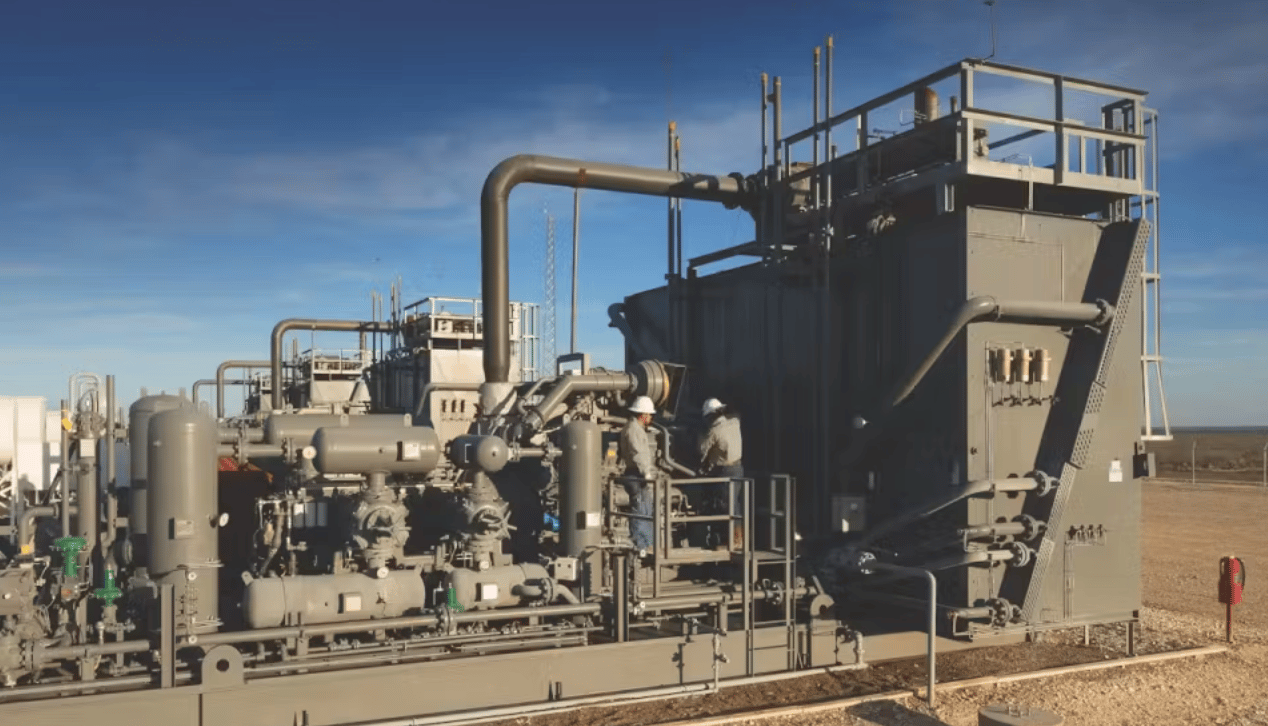
Today, I'm looking at Archrock (AROC), the largest natural gas compression service provider in the U.S. They keep gas flowing through the midstream system by renting out horsepower on long-term contracts. It's basically “compression-as-a-service.”
Here are a few takeaways from the report:
~85% of revenue is recurring from multi-year service contracts.
Gross margin has climbed from 31% in 2022 to nearly 46% today—process discipline pays.
Scale matters here: more fleet density, better uptime, more pricing power.
But...they carry ~$2.6B in net debt, and integration risk is real after multiple acquisitions.
This one is a case study in building a sticky, recurring revenue model even in a heavy-asset business. The downside is that these asset-heavy businesses and their high debt/leverage can make the model fragile if the cycle turns.
That said, this type of recurring revenue in an asset-heavy business is something that's new to me and rather compelling. So this was a fun report.
With that, I'll see you tomorrow.
Nick
TL;DR
Archrock is the leading provider of natural gas compression services in the U.S., running one of the largest fleets in the industry.
Its business model is subscription-like: customers pay monthly for compression uptime, making revenue mostly recurring.
The company’s edge comes from scale, standardized processes, and sticky long-term contracts.
Entrepreneurs can learn how to build moats with process power and recurring service models—even in heavy asset industries.
The downside: Archrock is highly leveraged, and debt plus cyclicality add fragility to their business.
The 30,000-Foot View
Business Model: Archrock owns, installs, and operates natural gas compression units at customer sites. Customers pay monthly fees for compression uptime. It also sells parts and aftermarket services for third-party compressors.
Revenue Mix (FY2024):
Contract Operations: ~$980.4M (~85%)
Aftermarket Services: ~$177.2M (~15%)
Key Stats (as of Sep 2025):
Market Cap: ~$4.4B
TTM Revenue: ~$1.35B
TTM Gross Margin: ~45.9%
TTM Net Income: ~$231.5M
Employees: ~1,300
Industry: Energy Equipment and Services
Company History
2007: Hanover Compressor and Universal Compression merge to form Exterran Holdings.
2015: U.S. contract compression and aftermarket services spun out as Archrock, Inc.
2018: Archrock acquires all publicly held units of Archrock Partners, simplifying structure.
2019: Acquires Elite Compression, adding ~430k horsepower.
2024: Acquires TOPS, adding ~530k operating horsepower in the Permian Basin. Issues $700M notes due 2032 and raises ~$256M equity.
2025: Acquires Natural Gas Compression Systems, Inc. (NGCS), adding ~326k horsepower.
Show Me the Money
Stand-out Financial Features
Recurring Base: ~85% of revenue comes from multi-year compression service contracts.
Margin Expansion: Gross margin climbed from 31.0% in 2022 to 45.9% TTM.
Rising Capex: Fleet growth and acquisitions pushed TTM capex to ~$448M.
Leverage Watch: Net debt is ~$2.6B, with leverage ratio ~3.3x; downcycle risk looms.
Financial Data
Metric | FY2022 | FY2023 | FY2024 | TTM |
|---|---|---|---|---|
Revenue | $845.6M | $990.3M | $1,157.6M | $1,348.9M |
Gross Profit | $261.8M | $375.1M | $505.9M | $619.2M |
Gross Margin | 31.0% | 38.0% | 43.7% | 45.9% |
Ops Profit | $164.7M | $254.8M | $360.7M | $458.2M |
Ops Margin | 19.5% | 25.7% | 31.2% | 34.0% |
CapEx | $239.9M | $298.6M | $359.0M | $447.6M |
Net Debt | $1,546.8M | $1,583.5M | $2,194.0M | $2,607.2M |
The N.O.O.B. Nine — Competitive Powers
The Nerd Out on Business Nine is made up of Hamliton Helmer's famous "7 Powers" of competitive advantage (Scale Economies, Network Economies, Counter-Positioning, Switching Costs, Branding, Cornered Resource, and Process Power) combined with two of my own (Data Flywheel and Distribution Advantage).
Power | Score | Rationale |
|---|---|---|
Branding | 3/5 | Reputation matters in bids, but price and uptime dominate. |
Data Flywheel | 2/5 | Uses telemetry, but no clear proprietary data edge. |
Process Power | 4/5 | Standardized fleet processes improve margins steadily. |
Scale Economies | 4/5 | Large fleet lowers per-unit service costs and boosts uptime through route density. |
Switching Costs | 4/5 | Replacing compressors is costly and risky for customers. |
Cornered Resource | 3/5 | Access to skilled techs and engine supply helps, but not exclusive. |
Network Economies | 1/5 | No increasing value from more customers joining. |
Counter-Positioning | 2/5 | Focus on large horsepower niches pressures smaller firms, but competitors can follow. |
Distribution Advantage | 4/5 | Strong basin coverage shortens response times and supports renewals. |
Average Score: 3/5 - Archrock has a durable moat based on scale, process, and distribution—not unassailable, but solid.
Memorable Marketing
Overall Approach: Archrock markets reliability and safety above all else, selling a “no downtime” promise. Channels include direct sales, trade shows, investor comms, and proof-driven safety programs.
Campaign Snapshots
“TARGET ZERO” Safety Program (2024)
Hook: Promote zero-incident mindset.
Channels: Training, customer QHSE talks.
Why It Worked: Customers value lower operational risk.
Result: TRIR of 0.17 in 2024, strong credential for RFPs.
“Leader in Electric Motor Drive” (2025)
Hook: Push eco-friendly compression as EMD expands.
Channels: Press releases, IR deck, sales collateral.
Why It Worked: Meets customer compliance needs.
Result: Strengthened Permian Basin fleet and positioning.
“Scale Story in M&A” (2019–2025)
Hook: Use horsepower additions as proof of scale.
Channels: Investor comms, press releases.
Why It Worked: Simple metrics (“added 530k HP”) stick.
Result: Elite (2019), TOPS (2024), NGCS (2025) all boosted credibility.
Tactical Takeaways for Founders
Turn safety or reliability metrics into marketing assets.
Share scale milestones in simple, memorable numbers.
Align with regulatory tailwinds and package compliance support as a service.
Make training hours and certifications part of your brand story.
AI Uses & Opportunities
Current Use: Likely uses telemetry analytics, but no disclosed large-scale AI systems.
Future Plays:
Predictive maintenance to slash downtime.
Dynamic technician dispatching with reinforcement learning.
Renewal and pricing scoring based on equipment usage data.
Methane monitoring and compliance services as an add-on.
Bumps in the Road
Cyclical Exposure: Utilization tied to customer capex and gas markets.
Heavy Leverage: ~$2.6B debt, concentrated maturities in 2027, 2028, 2032.
Integration Risks: Needs flawless execution to integrate recent acquisitions.
Environmental Rules: Methane standards may push costs down the chain.
Your Swipe File
Build recurring service models around critical functions customers cannot DIY.
Standardize and scale process power to steadily expand margins.
Sell with simple, proof-based metrics that prospects remember.
Don’t overextend: growth with too much leverage is fragile.
Treat safety and compliance as commercial advantages, not just obligations.