- Nerd Out on Business
- Posts
- Bread, Brands, and Debt
Bread, Brands, and Debt
Flowers Foods controls some of America’s best-known bread labels (Nature’s Own, Dave’s Killer Bread, Wonder) the largest distribution network in the industry. But behind the strong shelf presence, revenue has flatlined and debt has surged with the Simple Mills acquisition.

Nick Horob
September 09, 2025
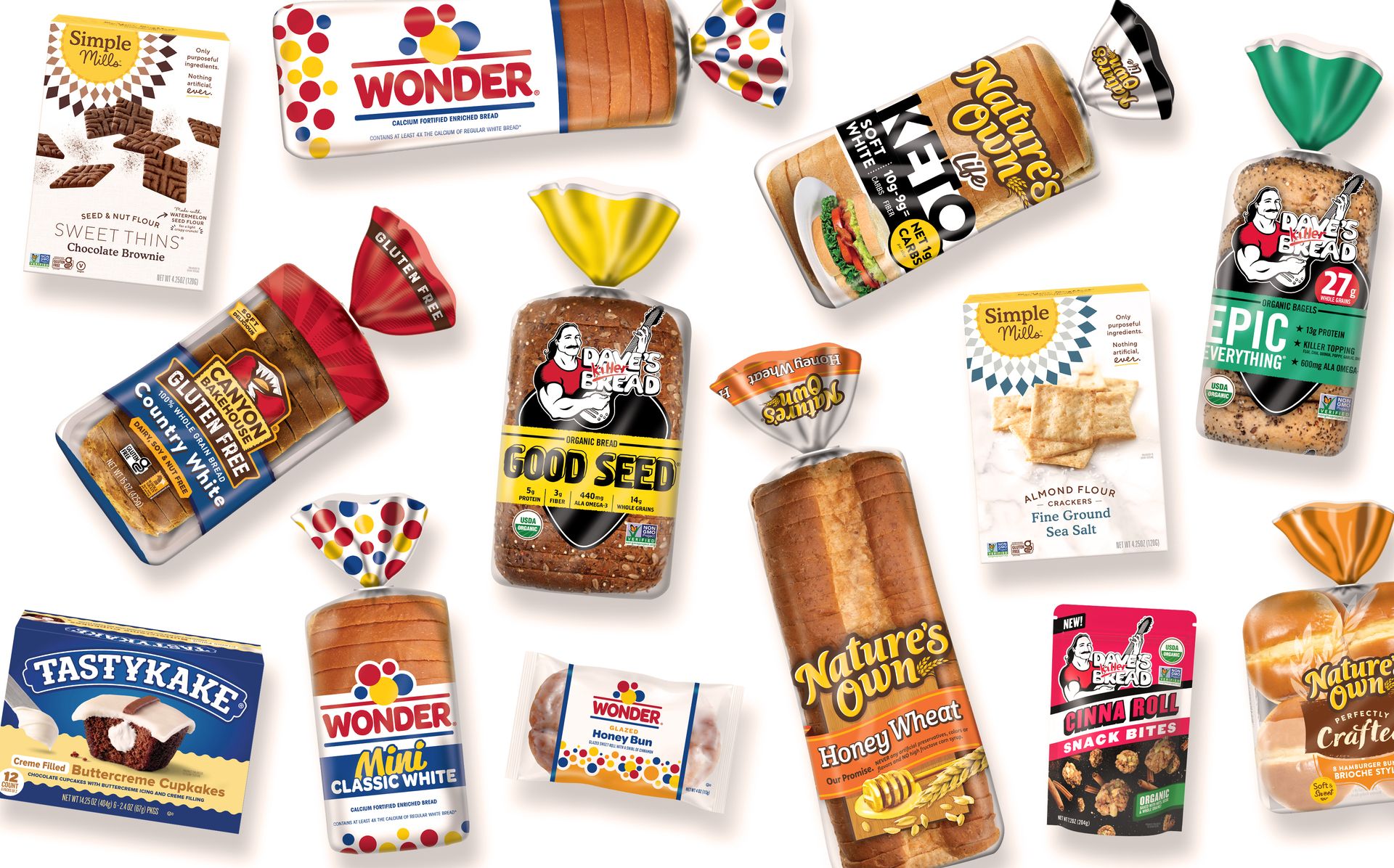
Today, I'm looking at Flowers Foods (FLO). They are he company behind the bread and snack brands you've likely seen on a shelf but maybe never noticed: Nature’s Own, Wonder, Dave’s Killer Bread, Tastykake, and Canyon Bakehouse.
A few quick takeaways from the report:
Distribution is their moat: Flowers runs one of the densest direct-store-delivery networks in U.S. grocery. That’s hard to copy.
Stable but flat revenue: About $5.1B in sales for the past few years. Not much growth, but margins bounced back in 2024 after inflation pressures.
Portfolio strategy: Their acquisitions of Dave’s Killer Bread, Canyon Bakehouse, and now Simple Mills show how they hedge against declining loaf bread volumes.
Debt spike: Net debt jumped to ~$1.7B after the Simple Mills deal. Rising interest expense is something to keep an eye on.
Entrepreneur lesson: In categories with low switching costs, winning shelf space and controlling logistics often matter more than innovating the product itself.
In all of business reviews, one of the first things I look at gross margin. I was surprised to see that the gross margin of Flowers Foods is approximately 50% given that they compete in a relatively commodity industry (albeit with some brands).
Going from a 50% gross margin to a mid-single-digit percentage operating margin shows the cost of having all of that distribution. Owning that massive distribution network has its cost, but in this case, it's really just a cost of doing business.
With that, I'll see you tomorrrow!
Nick
TL;DR
Flowers Foods is one of the largest packaged bakery companies in the U.S., with household brands like Nature’s Own, Wonder, Dave’s Killer Bread, Tastykake, and Canyon Bakehouse.
The company’s moat is built on scale, brand recognition, and distribution networks rather than consumer stickiness or tech differentiation.
Entrepreneurs can learn how controlling distribution, managing multi-brand portfolios, and operational efficiency can win in commodity-like industries.
Revenue is stable at ~$5.1B, but net debt has risen due to acquisitions, most recently Simple Mills in 2025.
Lesson: in low-switching-cost categories, owning the supply chain and shelf presence is often the winning strategy.
The 30,000-Foot View
Business model: Operates 44 bakeries with hybrid distribution:
Direct-store-delivery (DSD) for fresh bread and rolls
Warehouse delivery for snacks, gluten-free, and select items
Revenue mix (FY2024):
63.9% branded retail
36.1% store-brand and non-retail (foodservice, contract sales)
Key stats:
Market cap: ~$3.1B (Sept 2025)
TTM revenue: ~$5.1B
Gross margin: ~49.4%
Net income: ~$219M
Employees: ~10,200
Industry: Packaged Foods
Company History
1919: Flowers family opens first bakery in Thomasville, Georgia
2011: Acquires Tasty Baking Company (Tastykake)
2013: Buys Wonder Bread and Hostess bread assets
2015: Acquires Dave’s Killer Bread (~$275M), entering premium organic
2018: Acquires Canyon Bakehouse (~$205M), entering gluten-free
2023: Adds Papa Pita assets
2024: Rebuilt margins post-inflation
2025: Buys Simple Mills, expanding into better-for-you snacks
Show Me the Money
**Stand-Out financial features:
Margins rebuilt: Operating margin rose from 3.4% in 2023 to 6.8% in 2024.
Flat-ish topline: ~$5.1B revenue despite acquisitions.
Rising leverage: Net debt jumped in 2025 from Simple Mills purchase.
Capex light: ~2.5% of revenue for maintenance and upgrades.
Category challenge: Bread consumption softens while private label rises.
Financial Data
Metric | 2022 | 2023 | 2024 | TTM |
|---|---|---|---|---|
Revenue | $4.81B | $5.09B | $5.10B | $5.10B |
Gross Profit | $2.30B | $2.46B | $2.53B | $2.52B |
Gross Margin | 47.90% | 48.30% | 49.50% | 49.40% |
Ops Profit | $0.30B | $0.17B | $0.35B | $0.33B |
Ops Margin | 6.30% | 3.40% | 6.80% | 6.50% |
CapEx | $0.17B | $0.13B | $0.13B | $0.13B |
Net Debt | ~$0.73B | ~$1.03B | ~$1.02B | ~$1.74B |
The N.O.O.B. Nine — Competitive Powers
The Nerd Out on Business Nine is made up of Hamliton Helmer's famous "7 Powers" of competitive advantage (Scale Economies, Network Economies, Counter-Positioning, Switching Costs, Branding, Cornered Resource, and Process Power) combined with two of my own (Data Flywheel and Distribution Advantage).
Power | Score | Rationale |
|---|---|---|
Branding | 5/5 | Iconic household names across categories. |
Data Flywheel | 2/5 | Retail scanner and route data help, but no compounding loop. |
Process Power | 4/5 | High-throughput bakeries, ERP modernization, route density. |
Scale Economies | 5/5 | National production and procurement leverage cut unit costs. |
Switching Costs | 2/5 | Consumers and retailers can switch brands easily. |
Cornered Resource | 2/5 | Shelf contracts and routes valuable but not exclusive. |
Network Economies | 1/5 | Bread offers no network effects. |
Counter-Positioning | 2/5 | Premium/healthy niches are replicable. |
Distribution Advantage | 5/5 | Dense DSD network provides moat. |
Average Score: 3.1/5 - Strong in traditional levers (scale, brands, distribution), weak in modern stickiness (data, network).
Memorable Marketing
Overall strategy: Shelf visibility and brand portfolio dominate, rather than splashy national ads. Flowers relies on cultural tie-ins, cause marketing, and packaging.
Campaign Snapshots
Dave’s Killer Bread – “Second Chance Employment”
Hook: Hiring ex-felons and sharing their stories
Channels: TikTok, PR, owned media
Why it worked: Authentic, values-driven, earned press
Result: Differentiated brand story
Wonder – “Deploy the Joy” with USO
Hook: Support military families through donations and packaging
Channels: Retail displays, PR
Why it worked: Clear cause alignment
Result: >$3M in donations expected by 2026
Tastykake x Garfield (2024)
Hook: Limited-edition snacks tied to movie launch
Channels: Licensing, packaging, retail
Why it worked: Scarcity-driven impulse buys
Result: Boosted awareness for legacy brand
Tactical Takeaways
Align cause marketing with real brand DNA.
Use limited editions and pop culture tie-ins to spark shelf buzz.
Turn operations (like hiring programs) into PR.
Let packaging itself be the advertising.
AI Uses & Opportunities
Current use: Likely ERP, analytics, and basic routing.
Future potential:
AI demand sensing to reduce waste
Route optimization to cut costs
Vision-based QA in plants
Promo ROI modeling for trade spend
GenAI admin assistants for retailer forms/specs
Bumps in the Road
Distributor model pressure: legal/regulatory pushback, shift to employee routes in California
Category softness: fresh loaf volumes down, store brands up
Rising debt: Simple Mills deal spiked leverage
Input volatility: wheat, energy, and packaging swings hit margins
Your Swipe File
Own distribution: Logistics density is often harder to copy than product recipes.
Think portfolio: Cover multiple niches with distinct brands instead of one catch-all.
Leverage values: Authentic brand stories can fuel differentiation.
Shift mix: Add adjacencies to escape stagnating categories.
Cut wasteful promos: Trade spend is often a bigger leak than COGS.